Internet2
Site Index | Internet2 Searchlight |
Membership | Communities | Services | Projects | Tools | Events | Newsroom | About
 | Home

Services
Internet2 Network
WaveCo
FiberCo
The Commons
InCommon
Usher
MAN LAN
Workshops
Projects
HOPI
End to End
The Observatory
Middleware
Security
Shibboleth
SIP.edu
Digital Video
ITECs
Disciplines
Applications
Health Sciences
Science & Engineering
Arts & Humanities
Community
Membership
Regional Networks
International
Government
K-20 Initiative
The Quilt
SEGPs
Working Groups

Immersive Medical Teleprescense

Conference Overview | Agenda | Registration | Accommodations | Sponsors

Conference Overview

The Health Sciences, perhaps more than any other discipline, is dependent of images/video and the analysis of these images to be successful. This is true in biomedical research, health education and of course in clinical care. These images are increasingly digital and improving in resolution by orders of magnitude. This simultaneously allows more flexibility with the analysis of the image and much better analysis. The data resources are logically growing exponentially there is a growing need to share and compare images.

The ability to effectively use and share these resources is often a local issue with individual solutions being developed. There are exceptions and when they are discovered they are often treated as significant success stories. For example, the SUMMIT Project at Stanford University has created a significant set of stereoscopic and haptically enabled Digital Anatomy resources. These resources and the expertise at Stanford will be used across the nation and now internationally to teach anatomy courses.

As the health sciences continue to become more specialized and the educational resources become more difficult to locate, advanced networking that allows secure, reliable access to expertise and high quality resources is critical. The ability to create virtual organizations and collaborate with and among students, professors, researchers, and clinicians irrespective of location is of increasing value.

At the same time, large-capacity research networks (e.g., Internet2 and peered networks, GLORIAD) and high-quality video applications (e.g., DV-over-IP, developed by the WIDE Project and stereoscopic HD video-over-IP realized by GIST are making such virtual collaboration technically possible and financially affordable. However, the absence of (human) networking opportunities has hampered the development of sustainable testbeds and slowed the rate of innovation.

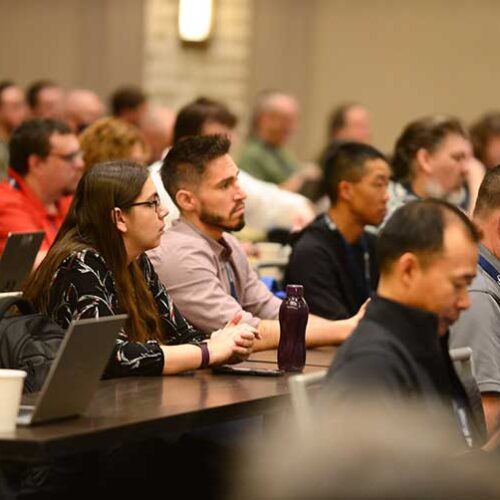
This workshop will focus on our ability to effectively use and manipulate image / video resources irrespective of their location. It will also showcase many emerging technologies relevant to the medical field. Most importantly, it will provide an opportunity for those in the medical community to learn alongside experts in the area of video technologies and large capacity networking about the challenges ahead and to begin a discussion about how those challenges can be met.

For more information, please contact imt-sc@listserv.utk.edu.


© 1996 - 2008 Internet2 - All rights reserved | Terms of Use | Privacy | Contact Us
1000 Oakbrook Drive, Suite 300, Ann Arbor MI 48104 | Phone: +1-734-913-4250